|
Air Purifiers By Application
|
||||||||||||||||||||||||||||||||||||||||||||||||||||||||||||||||||||||||||||||||||||||||||||||
|
Air Purifiers and Air Cleaners at CleanAir4Life.com
The following list of articles about air purifiers and air cleaners are provided by CleanAir4Life to help you understand the benefits and advantages provided by these air purification products and how cleaner air can help you live a healthier lifestyle.
Allergies, Air Cleaners and a Healthy Lifestyle: For so many allergy sufferers, spring and summer can be an uncomfortable and dreadful period of time. With Americans spending nearly 90% of their time indoors, it is of the utmost importance that your home has good quality air to help reduce the amount of contaminants you breathe everyday . . .
Allergies: Approximately one out of five Americans suffer from Allergies, 10% or 10 million Americans from pollen allergies alone! HEPA filters (like the Blueair Air Filter) will eliminate 99.97% of particles from the air down to 0.3microns in size and is best for individuals suffering from pollen, dust, and dust mite induced allergies . . .
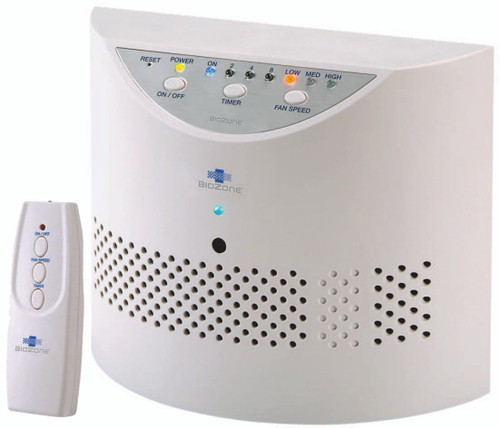
Are Biozone Air Purifiers Safe: Biozone air purifiers are a very safe and effective way to cleanse the air without being harmful to the individual or the environment. Biozone Air Purifiers have gained a bad rap along with ozone because of their ozone output, although, they were created to produce 0.025ppm of ozone for the room space they are intended for. This is significantly below the CSA and EPA standard of 0.040ppm and the 0.050ppm requirement by many state laws . . .
HEPA Filters: HEPA (High-Efficiency Particulate Air filter) filters were designed to remove at least 99.97% of airborne particles down to 0.3 microns in size which are the most difficult particles to filter. People suffering from allergies benefit greatly by the use of a HEPA filter like the Blueair Air Filter which uses not only HEPA technology, but also prefilters designed to extend the life of the HEPA filter . . .
UV Light:UV Light is so important in all aspects of life, that without it, our lives would literally be at risk of a multitude of contaminations and deficiencies. By educating yourself on this topic, you are taking the first step to gaining a healthier lifestyle by expanding your knowledge on ways UV light can enhance your quality of life inside and out . . .
What is Ozone: (pdf document) Ozone is second only to fluorine as the strongest known oxidizer in the world, and the most powerful readily available water sanitizer. Ozone inactivates bacteria and viruses 3,125 times faster and is a 50% stronger oxidizer than chlorine. Ozone is unsurpassed for control of many types of common bacteria such as E. Coli and fecal coliforms as well as the de-activation of virus, fungus, mold, mildew and cysts, and is noncarcinogenic . . .
Ozone
Ozone is a normal part of our everyday life and in fact is so beneficial that new and positive uses for it are being discovered on a continuous basis. It is unrivaled for control of many types of common bacteria such as E. Coli and fecal coli forms as well as the destruction of virus, fungus, mold, mildew and cysts, and is non-carcinogenic.
Bottled Water vs. Tap Water: “Sales of bottled water in this country have exploded in recent years, largely as a result of a public perception of purity driven by advertisements and packaging labels featuring pristine glaciers and crystal-clear mountain springs. But bottled water sold in the United States is not necessarily cleaner or safer than most tap water, according to a four-year scientific study recently made public by NRDC.” . . .
Why Choose Biozone Air Purifiers: Biozone’s PureWave™ process removes contaminants from the air and surfaces by combining two very powerful purifying technologies - photoplasma and photochemistry. While these methodologies have been well studied and documented by the scientific community, the synergy of their interaction produces a unique and a superlative way of cleaning air and surfaces of contaminants . . .
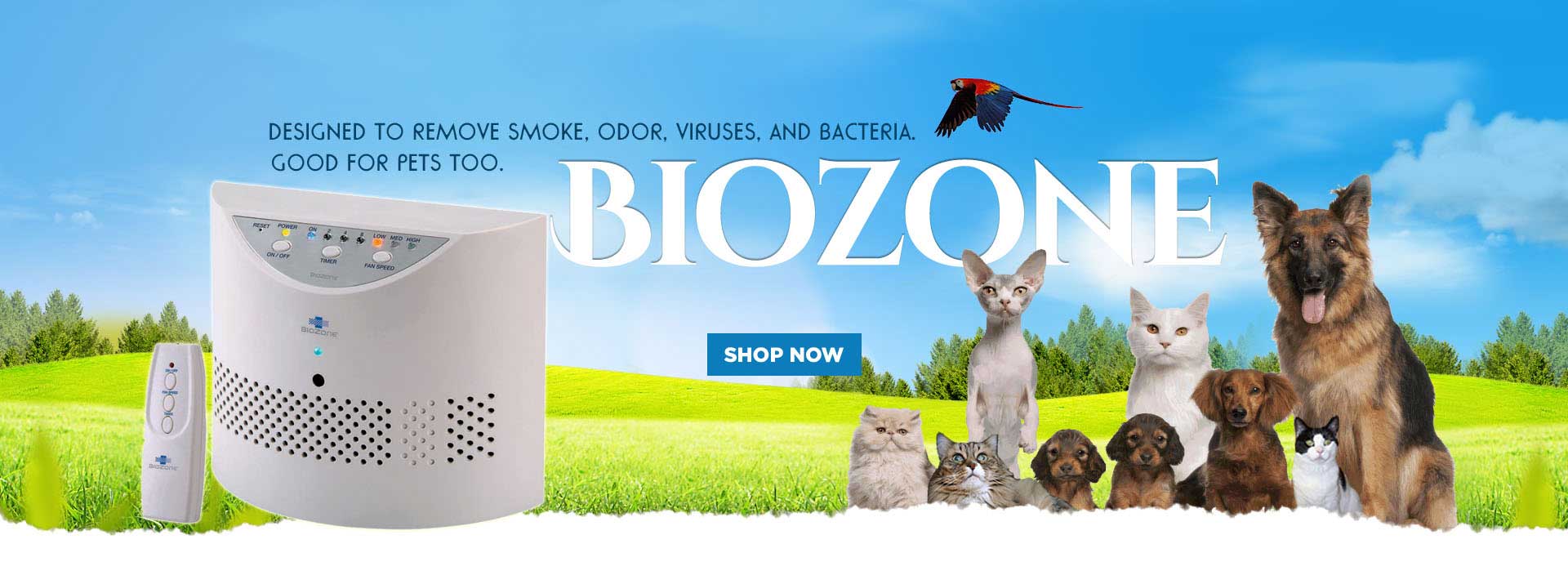
Biozone Air Purification Methods: PureWave & UltraPure Biozone air purifiers and water purifiers remove more smoke, dust, mold, odor, cat and dog dander, allergens and other pollutants from the indoor air and water using a special state of the art technology developed by Biozone Scientific. Doctors reveal that Biozone air purifiers can help reduce mold, mildew and allergy symptoms and make the best smoke eaters available . . .
Indoor Air Guide: (goes to EPA website) Indoor pollution sources that release gases or particles into the air are the primary cause of indoor air quality problems in homes. Inadequate ventilation can increase indoor pollutant levels by not bringing in enough outdoor air to dilute emissions from indoor sources and by not carrying indoor air pollutants out of the home. High temperature and humidity levels can also increase concentrations of some pollutants . . .
Residential Air Cleaning Devices Information: (goes to EPA website) Indoor air pollutants are unwanted, sometimes harmful materials in the air. They range from dusts to chemicals to radon. Air cleaners are devices that attempt to remove such pollutants from the indoor air you breathe. This publication describes the types of air cleaners available to the consumer, provides available information on their general effectiveness in removing indoor air pollutants, discusses some factors to consider in deciding whether to use an air-cleaning unit, and describes existing guidelines that can be used to compare units . . .
Air Cleaners, Should I Use One?: (goes to EPA website) Air cleaning devices are intended to remove pollutants from indoor air. Some air cleaning devices are designed to be installed in the ductwork of a home’s central heating, ventilating, and air-conditioning (HVAC) system to clean the air in the whole house. Portable room air cleaners can be used to clean the air in a single room or specific areas, but they are not intended for whole-house filtration. The following pages will provide information on different types of air cleaning devices and how they work . . .
Clearing The Air: (pdf document) “Just two days of exposure to HEPA filters in the home resulted in a significant, positive effect on a key measure of cardiovascular health among 21 nonsmoking couples ages 60 to 75, says Dr. Steffen Loft, professor of environmental health at the University of Copenhagen's Institute of Public Health…” . . .
Is Your Home Making You Sick?: According to the Environmental Protection Agency, levels of air pollutants inside American homes and offices can be two to five times greater than outside, even in some of our most polluted cities. With some people spending up to 90% of the day indoors, we should have an entirely new appreciation for the term “fresh air.” . . .
From The Learning Library
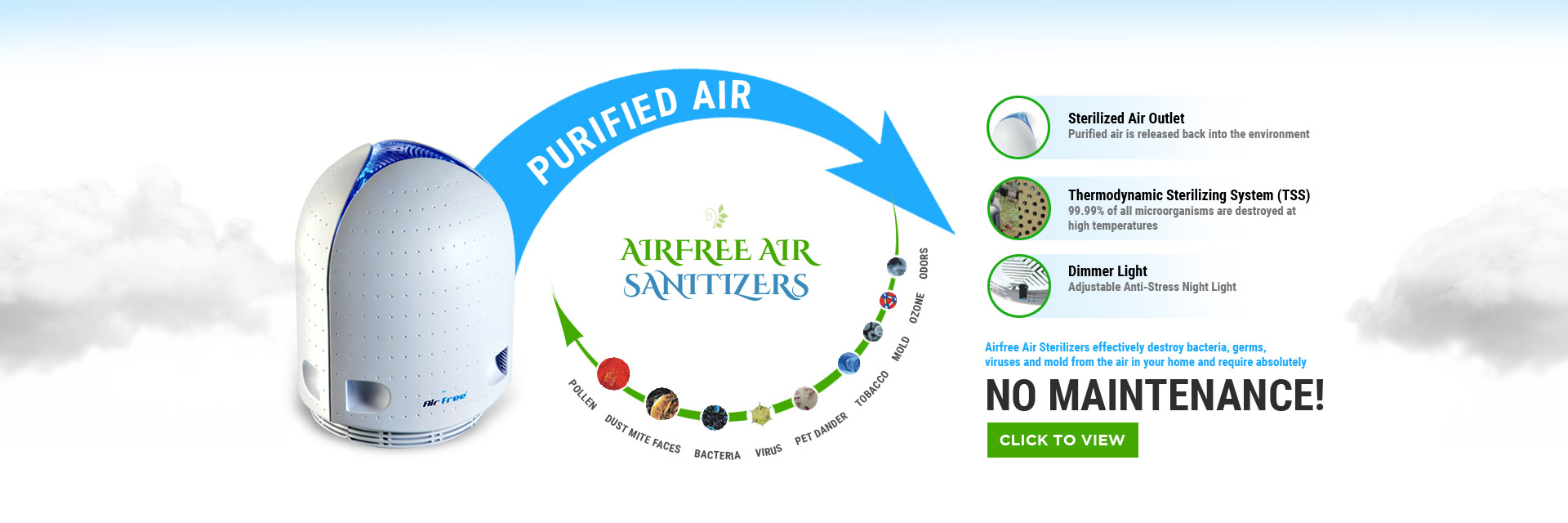
Air Cleaners vs Air Purifiers Which One is Right For You How Do I Choose? You've heard that indoor air pollution can be a significant health concern. In fact, the EPA has said that air quality inside American homes and offices can be two to five times worse than outside. If you spend a lot of time indoors, you need to consider taking control over the air entering your lungs. And if you suffer from allergies, asthma, or other respiratory problems or if you just want extra insurance against colds and flu, breathing cleaner air is even more critical. But choosing the right product can be confusing and intimidating. Keep in mind that there is a difference between cleaners and purifiers. Cleaners generally involve a series of filters that captures particulates-including dust, dander, pollen, microorganisms and other airborne debris-from the air that circulates through the unit. Purifiers utilize a variety of technologies to destroy microorganisms, chemicals, odors and other contaminants, often at the molecular level. Depending on the unique conditions in your home or office or your particular medical requirements, you may require one or more of the following common technologies. Keep in mind that many of these technologies are complementary-the strengths of one may make up for the weaknesses of another. Cleaners Filtration: The most common and most effective filter is the HEPA filter, or high-efficiency particulate filter. Developed by the Atomic Energy Commission, HEPA filters remove 99.97% of all particles larger than 0.3 microns. In order to be cleaned by filtration, air must travel through the cleaning unit, so rooms that are overly large will not be effectively treated by this method. Some air cleaners include a pre-filter to capture larger particles and prolong the life of the HEPA filter, while some include an antibacterial filter to trap and kill microorganisms. HEPA filters are effective at removing dust, pollen, mold, dust mites, bacteria and allergens, however this technology will not remove chemical fumes, gases, cigarette smoke, odors or viruses. An activated carbon filter can be used alongside a HEPA filter to absorb fumes, gases, smoke and odors, but a carbon filter alone cannot remove particulates. Purifiers Ionizer (Negative Ions): Negative ions chemically bond with airborne contaminants, creating a molecule too large to remain in the air. Ions are capable of removing particles as small as 0.01 microns and can do so outside of the unit, in an area up to 500 square feet. This method is capable of neutralizing viruses, bacteria, cigarette smoke and chemical fumes, yet it does not remove odors, germs, fungi and some viruses and chemicals. With an ionizer alone, there is no method to collect neutralized particles. Ultraviolet Germicidal Irradiation: The wavelengths of UV light are destructive to microorganisms, such as viruses, bacteria, fungi and mold spores that pass by the unit's internal lamp. This method effectively protects against the spread of disease, but it does not affect particulates, chemical fumes, gases, cigarette smoke or odors. Ozone: Ozone is a molecule made up of three oxygen atoms. Because it is highly reactive, ozone is extremely effective at destroying most bacteria, chemicals and odor causing agents at the molecular level. A small percentage of people are sensitive to ozone and may experience irritation of the eyes, nose and or throat, so an ON/OFF setting is often desirable. Ozone has no effect on particulates. Other Factors to Consider Whole-House versus Room Units: Whole house units are installed directly into the ducts of a forced air heating and cooling system, while room units clean the air in one room only. Room Size: Free standing units are rated based on the volume of air they can reasonably clean. Choose a unit that is rated to accommodate at least the square footage of the room to be cleaned, otherwise you will not experience improved air quality. When choosing an ionizer or ozone emitting unit, be sure to size the unit properly by matching the unit to the size of space and level of contaminants. It is possible to overwhelm a room if too large of a unit is used. Delivery Rate: Units that must draw air inside for it to be cleaned have a certain Clean Air Delivery Rate (CADR), which is a measure of a unit's efficiency. The higher the CADR value, the more air the unit can draw in, and the faster it can clean and distribute. Noise: Depending on the technology in use, air cleaners and purifiers vary greatly in terms of sound emissions, measured in decibels, or dB(A). A higher dB(A) value means higher noise, so consumers may wish to turn the unit on high when the room is empty, and turn the speed lower, reducing the noise level, when the room is in use. Replaceable Parts: Cleaners rely on filters, while some purifiers utilize UV (ultraviolet) lamps to eliminate contaminants. Both filters and lamps wear out, necessitating replacement every six to 12 months. Consider the cost of the replaceable parts when comparing your investment. CleanAir4Life is proud to bring you these important products and replacement parts from manufacturers like Biozone, Airfree, Blueair, Neoair and Pure Indoor Systems, at the best prices.
Copyright © 2009 CleanAir4Life.com. All rights reserved.
Live Healthy With Clean Air Affordable, reliable, and assembled with the highest technological standards, air purifiers work to combat dust, mold, pet dander, and drifting bacteria. Trapping harmful, floating pollutants and increasing the environmental health standard of family homes and businesses is the job of air purification systems. Air purifiers are designed to fit a huge variety of spaces and lifestyles. They range in size from large, sleek towers, which work effectively in large homes and offices, to compact, portable systems that can be worn around the neck or placed on a desk in the communal workspace or home office to keep air clear of smoke, viruses, and allergens. Air cleaners represent the most effective tools for purifying the air of small to medium-sized living spaces. Designed to remove harmful particulate matter and gaseous pollutants that are byproducts of household appliances such as stoves and fireplaces, air cleaners come in a large variety of makes and models. Whether built into the HVAC system or portable units that can be moved from room to room, air cleaners are credited with relieving symptoms for asthma and allergy sufferers. If you are having difficulty determining which air purifier or air cleaner is right for you we suggest viewing our air purifier and air cleaner Comparison Chart. Our chart compares products, product features, most effective applications for each product and prices all in one location. Copyright © 2009 CleanAir4Life.com. All rights reserved.
|
||||||||||||||||||||||||||||||||||||||||||||||||||||||||||||||||||||||||||||||||||||||||||||||